How to cradle a baby? Why cradling is so important for your baby?
Mastering Baby Cradling: Essential Tips for Nurturing Your Infant's Growth ! Key Takeaways Cradling your baby provides numerous developmental benefits. This position supports your baby's entire body, creating a sense of security that aids in motor skills, social, and language development. By cradling your baby, you're giving them a safe space to explore their hands,…

By Anat Furstenberg, Child Development Specialist · 20+ years
August 5, 2021·13 min read
arrow_downwardJump to section
Key Takeaways
- check_circleCradling your baby provides numerous developmental benefits. This position supports your baby’s entire body, creating a sense of security that aids in motor skills, social, and language development. By cradling your baby, you’re giving them a safe space to explore their hands, reach for your face, and interact with you face-to-face. This simple act of holding your baby can have long-lasting positive effects on their growth and emotional well-being.
- check_circleThe cradle hold is a versatile technique that can be used in various situations, from calming an overstimulated baby to aiding in breastfeeding. It doesn’t require any special equipment or setup, making it an accessible tool for all caregivers. By mastering this hold, you’ll have a go-to method for soothing your baby, promoting relaxation, and even helping them fall asleep. This can be particularly valuable when dealing with fussy periods or in public settings where you need to comfort your baby quickly.
- check_circleConsistent cradling can foster a strong emotional connection between you and your baby. By dedicating focused time to hold your baby in this position, you’re creating opportunities for meaningful interaction and bonding. This practice encourages you to be present with your child, setting aside distractions like phones or other devices. Over time, these moments of connection can contribute to your baby’s sense of security and emotional development, potentially influencing their ability to form healthy relationships in the future.
Mastering Baby Cradling: Essential Tips for Nurturing Your Infant’s Growth
!
Unlock your baby’s full development potential Today.
Get your baby’s custom growth and development report.
How to cradle a baby, Frequently Asked, Short Answers:
Quick Links:
- What Cradling Is
- What Cradling Does?
- Cradle Hold Vs. Cross Cradle Hold
- Tips for Cradling
- Facts About Cradling
- Common Tendencies in Women and Cradling
- Nursing and Cradling
- Baby Development
- Conclusion
Cradling in particular is a position in which you hold your baby in a way that supports him or her from head to toe… Cradling a baby has many benefits and potentially long lasting results, which range from affecting baby development in a positive manner, to assisting in feeding, and so much more. You can think of cradling as similar to being told to sit up straight or to have good posture – it’s something that we know we should do, but sometimes need a reminder to do, as well. Sometimes new parents do not realize the benefits of holding their baby in a particular way, or may try something a limited number of times and give up on it, instead of developing a consistent pattern. Cradling may sometimes be one of those things, but after you realize all of the reasons to be intentional about cradling, you will be better able to implement – and enjoy – carrying your child in this position into your daily activities.
What Cradling Is
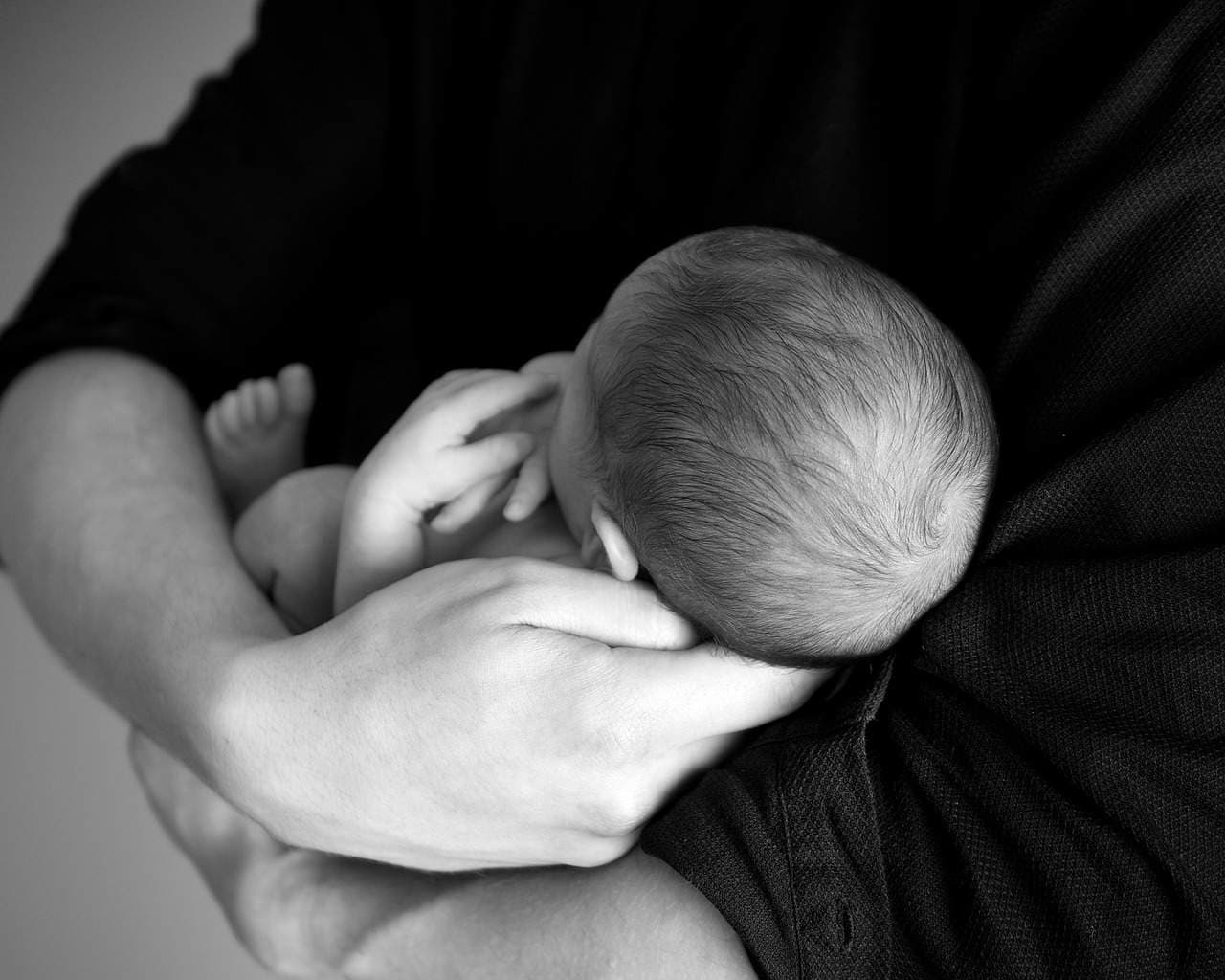
Holding a baby is a wonderful, beautiful thing! Cradling in particular is a position in which you hold your baby in a way that supports him or her from head to toe. Personally, I found this to be a natural way to hold a resting newborn. Cradling isn’t just for newborns, though – it is an important activity throughout a baby’s first few years.
Cradling a baby has many benefits and potentially long lasting results, which range from affecting baby development in a positive manner, to assisting in feeding, and so much more. You can think of cradling as similar to being told to sit up straight or to have good posture – it’s something that we know we should do, but sometimes need a reminder to do, as well. Sometimes new parents do not realize the benefits of holding their baby in a particular way, or may try something a limited number of times and give up on it, instead of developing a consistent pattern. Cradling may sometimes be one of those things, but after you realize all of the reasons to be intentional about cradling, you will be better able to implement – and enjoy – carrying your child in this position into your daily activities.
What Cradling Does
Cradling is thought to aid in a newborn’s development by creating for them a sense of security. The physical benefits are seen in motor skills development, as the arms are free – yet the body is secure. A baby who spends time in the cradling position can, then, play with her hands, and reach for her parent’s face. Along the same lines, there are benefits in social and language development, as it is an easy position in which the infant can see the parent’s face and interact. Cradling a baby can be used as a calming method, and for some babies, this can aid in, and often does result in, falling asleep. This is because the baby is able to relax in this full body, supportive position.
Cradle Hold Vs. Cross Cradle Hold
Perhaps you are wondering how to cradle a baby correctly. It sounds basic, and really, it is. The cradle hold and the cross cradle hold are similar, but each makes use of the caretaker’s arms slightly differently. One similarity is that both positions require both arms to be engaged.
The cradle hold involves the baby’s head resting in the crook of your arm, with that same arm’s forearm and hand supporting her back as far down as possible, and then the other arm supports the baby’s bottom. This arm also will support the baby’s knees and legs. The baby is parallel to the ground in this position, but, as you will feel, his back will slightly curve.
Similarly, the cross cradle hold uses the arm opposite of the baby’s head to hold his or her neck, supporting and controlling the head, as well. Then, the arm that is closer to the baby’s head crosses over and is used to support his or her bottom. This may provide an extra secure feeling for some babies.
The goal, of course, for both positions is a fully supported feeling for the baby. This physical support enables a baby to relax, and encourages positive emotions to be experienced and associated with being held.
Tips for Cradling
Cradling doesn’t necessarily have an optimal age limit; this position can be comforting for as long as you naturally hold your child. This extends through the toddler ages. Some babies may become so active that they cannot be cradled for quite as long or often, but the benefits of having done so, or even attempting to keep doing so, may remain.
Holding your baby’s outer elbow in the cradling position enhances the experience, as his or her arm is not dangling to the side. (The arm closest to you will be pressed upon by your body, so that it is not dangling, either.) Holding the arm at the elbow still allows for some movement, and you may observe your baby calmly exploring her hands, which may rest closely together in this position.
Cradling can be a great relief to an overstimulated infant, whether the overstimulation is due to a crowd, too many toys with sounds and lights, other (perhaps older) children playing, or even a family pet that is excessively engaged at the time. It allows the baby to focus on just one face, and perhaps just that person’s voice if he or she is using it to soothe the child while in the cradle hold. Talking to, singing to, and moving with your baby while you hold her in this position can add to the overall experience.
Much to our overly connected chagrin, cradling isn’t being done properly if you are holding a phone, the remote, or trying to work on something else; it is about focusing on your baby, and since your baby is focusing on you, he will notice the difference if you are distracted or disengaged, especially as he becomes older. Cradling doesn’t need to be done every moment – and neither does your phone need to be checked every moment, despite that flashing light or notification sound – and the importance of a few moments of pause with your baby should outweigh any incoming emails or text messages.
Facts About Cradling
- Cradling doesn’t take any extra equipment, money, or time to set up! It’s just about you and your baby.
- The cradle hold is natural, and mimics the position and form a baby has in the womb.
- Cradling supports the baby’s entire spine when done properly.
- A baby who is fully supported along her whole back and body feels safe and secure.
- A baby can enjoy being cradled by any parent or caretaker, not just a breastfeeding mother.
- You can cradle a baby anytime, anywhere.
- Your baby may come to look forward to being cradled.
- You are creating a good habit of taking the time to spend actual face time with your little one when you cradle him.
- Cradling your baby often does not spoil your baby.
- Cradling just may become one of your favorite memories with your little one!

Common Tendencies in Women and Cradling
Another interesting fact is: most women cradle to the left. While speculations in the past have attributed this to most women being right handed, so this position would be freeing the dominant hand – the study by Victoria Bourne and Dr Brenda Todd attributes this instead to the way the human brain processes information, specifically that of emotional behaviors. According to this study, that information goes to the right side of the brain, which is known to be connected most directly with the left side of the body. This connection explains why even most left-handed women hold their babies on the left – to observe their facial expressions and in turn, their constantly changing wants and needs – despite the potential loss of productivity that would occur from occupying their dominant side.
This also explains the studies from England and Switzerland which attempted to link how a mother holds her child and her emotional health; the studies linked stressed out, depressed women, or those on the verge of depression, to being most likely to hold their babies in the crook of their right arms, as opposed to the seemingly more natural way of holding babies in their left arms. This would seem to imply there is a disassociation or lack of a proper connection between a woman and her baby’s needs and emotional responses during a time of great stress or depression. This is extremely important, as this stress and disconnection could be mirrored in a baby’s emotional development if left uncared for.
Nursing and Cradling
The cradle hold, as well as the cross cradle hold, can also be used during breastfeeding, although it will look a little different. Instead of the baby being held parallel to the ground, the baby is held facing the mother’s body. When nursing with a cover, the cradle hold was the easiest and most effective position for me; it gave my baby the ability to focus, and relaxed her even if we were in a loud environment, such as a restaurant or another public place. It also allows for a baby to easily fall asleep at the end of a nursing session, which was often the case with my little one.
The cross cradle hold actually gives you more control over your infant’s head, which can be more useful when guiding an especially young, or fussy baby during feedings. I found the cross cradle technique to be harder the longer – and more active – my baby became. Even so, it was great in the beginning when we were working on her latch. If your baby has a lot of head control early on, you may find her fighting the cross cradle hold in an attempt to independently direct her head. If she can latch well, switching to the cradle hold may be more comfortable.
While there are several other great nursing positions, including those that are even taught in hospitals and by lactation consultants, these two positions more so ensure that the baby stays in proper alignment and is at an optimal angle for feeding. As mentioned above, in both of these nursing positions, the baby should face the mother’s stomach, with his shoulders aligned with his hips, as well as his head, and knees, which will be slightly bent. Your baby may try to press his feet against something nearby, completing the alignment through the rest of his legs.
Find more info from parents directly on Reddit:/r/beyondthebump | /r/NewParents/ | /r/Parenting/
Baby Development
As you can see, holding a baby in a cradle hold has numerous potential benefits and a whole range of usefulness. From the most awkward new father, to the breastfeeding mother, to the most experienced grandmother, there is no one who cannot cradle a baby if they try. Cradling a baby before sleep, or simply holding a baby in the cradle or cross cradle hold, is definitely something that should be considered and consistently used in the raising of a calm, secure feeling child. While every baby hits newborn milestones at different slightly different ages, it is wise and natural to want to do everything possible to encourage proper baby development, including regularly making use of the cradling technique.
If you are unsure about how to cradle a baby properly during nursing, seeking a lactation consultant or nurse who works with infants is a great option. Often there are a certain number of times you can see a consultant for free – check your insurance policy. This will allow you to feel confident about how to cradle your baby properly. You may also receive advice about particular milestones from your health care provider if you are concerned about motor skills, social skills, and language development, among other baby development issues.
Conclusion
Creating an environment where a baby is assured he has your focused attention, can focus his attention on you, and does not feel bombarded by all of the other potential stimuli he will eventually become used to, will ensure he can learn and grow in his own way, and at his own pace. Encouraging your baby to periodically relax throughout the day, and at nursing sessions if applicable (which can be quite stressful at first for new moms), will encourage less stress and anxiety for your child as he becomes older, potentially even on through adulthood. As you teach your baby about the world, you will want him to feel safe and secure when he is close to you, and cradling allows him to do so.
What do you think about the cradling positions? Did you use cradling as a source for relaxation? Did cradling give your baby a calm and secure feeling? Let us know in the comments below.
Want to go deeper?
Get the full development system for your baby
Week-by-week guidance, milestone tracking, and expert video classes, all in one place.
See Plans & Pricingarrow_forwardYou May Also Like

How to Handle a Baby Who Refuses to Wear Clothes.
During the first year, dressing your infant takes a lot of time and effort. New parents have a lot on their plates just trying to keep their baby clean, cozy, and dressed, not to mention the color controversy and the quick rate at which most infants outgrow their apparel. So, what do you do if…
Read Morearrow_forward
Why do toddler constantly whining? Crying and whining is communication – do you understand your baby?
Why do toddlers constantly whine and cry? Understand the science behind tears, the types of crying, and how parents can respond with empathy to support their child's emotional development.
Read Morearrow_forward
What can calm a baby while driving, or while in the car?
What can calm a baby while driving or in the car? Discover practical tips for soothing your newborn during car rides, from wrapping techniques to music, and when to safely pull over.
Read Morearrow_forward